When Art Opens the World — Stanley Wany at 1‑54
February 21, 2026 at 4:41 pm,
No comments
There are moments in contemporary art when presence becomes insight — when standing before a work by the artist himself transforms observation into understanding. At this year’s 1‑54 Contemporary African Art Fair, I had the rare pleasure of experiencing the work and presence of Stanley Wany, a multidisciplinary artist whose practice navigates identity, memory, myth, and the layered histories of the African diaspora. 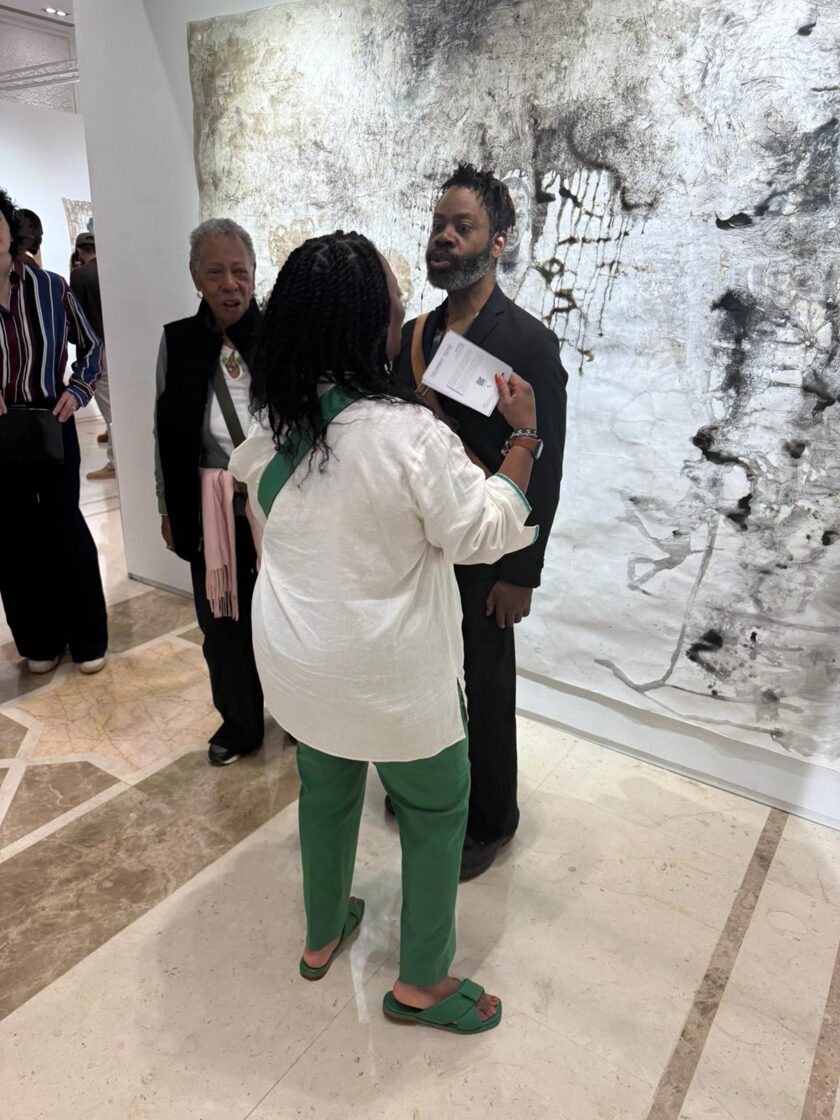
Wany’s practice extends across drawing, painting, installation, and experimental narrative forms, tracing complex personal and collective narratives through materials that carry symbolic weight. Drawing on substances such as coffee, indigo, cotton, and sugarcane paper, his work evokes unresolved intersections of history, trauma, and resilience — material languages that resist simple interpretation and instead demand deep engagement.
At the heart of his 1‑54 presentation, including works such as Sur le chemin de Port au Prince (2024–2025), is an exploration of diasporic memory and cosmology, where figures, gestures, and marks become resonant carriers of presence and absence. Through conversation with the artist, I was granted access to his process — to how l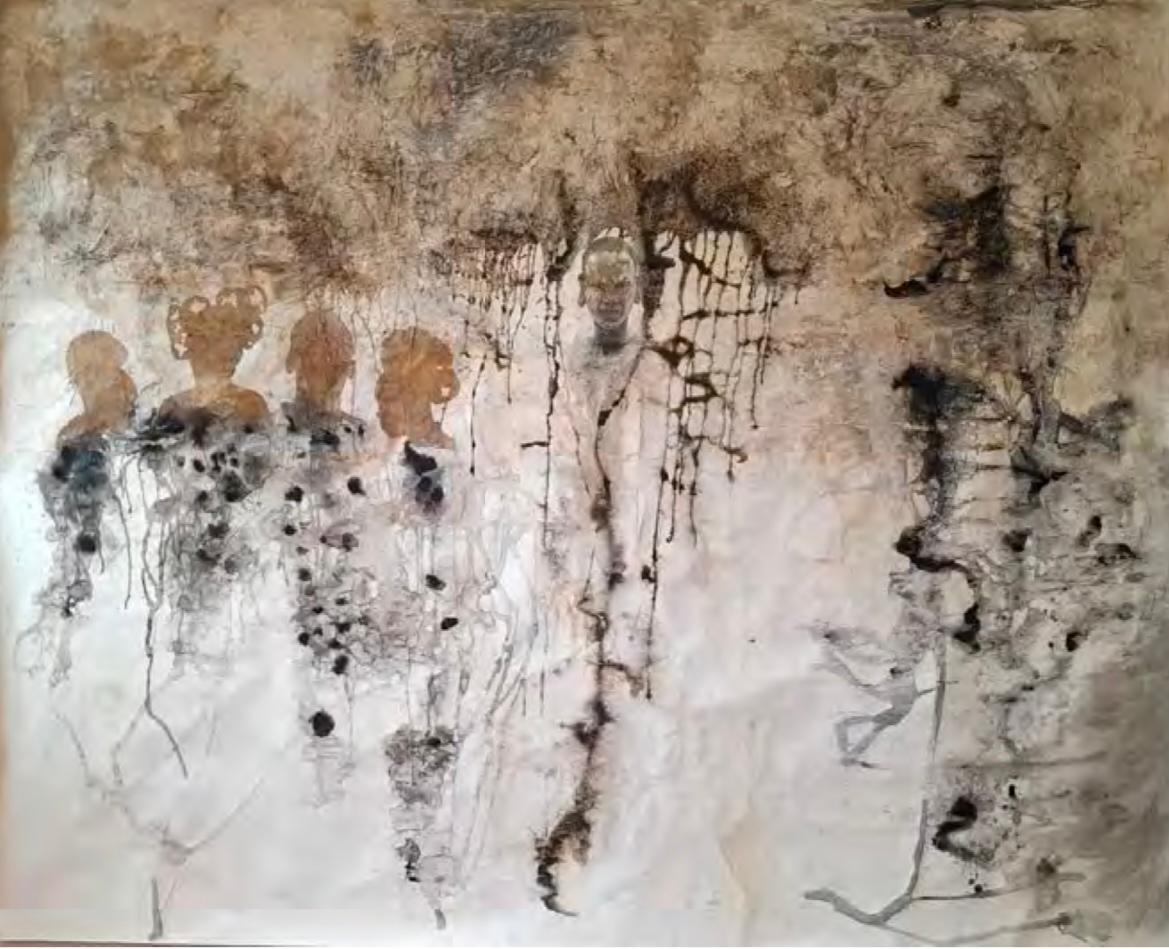 ineage, migration, and layered histories inform each mark, each gesture, each spatial choice. This is art that does not simply exist on paper but speaks with paper, using the medium itself as both archive and voice.
ineage, migration, and layered histories inform each mark, each gesture, each spatial choice. This is art that does not simply exist on paper but speaks with paper, using the medium itself as both archive and voice. Meeting Stanley in person — feeling his articulation of ideas and witnessing his work up close — elevated what could have been a visual encounter into a profound dialogue. Works that might first appear abstract reveal themselves as repositories of lived and inherited histories, inviting the viewer into a reflective, almost participatory experience.
My sincere thanks to Karina Roman Justo and Christine Redfern for their generosity and insight in supporting these conversations. Their guidance enriched this experience and deepened the contextual understanding that is vital for collectors seeking works with longevity, intellectual depth, and real cultural voice.
In moments like these — where artist, artwork, and audience converge — art truly opens worlds. And it is a privilege to share these resonances with those who collect not only objects but the stories that shape them.