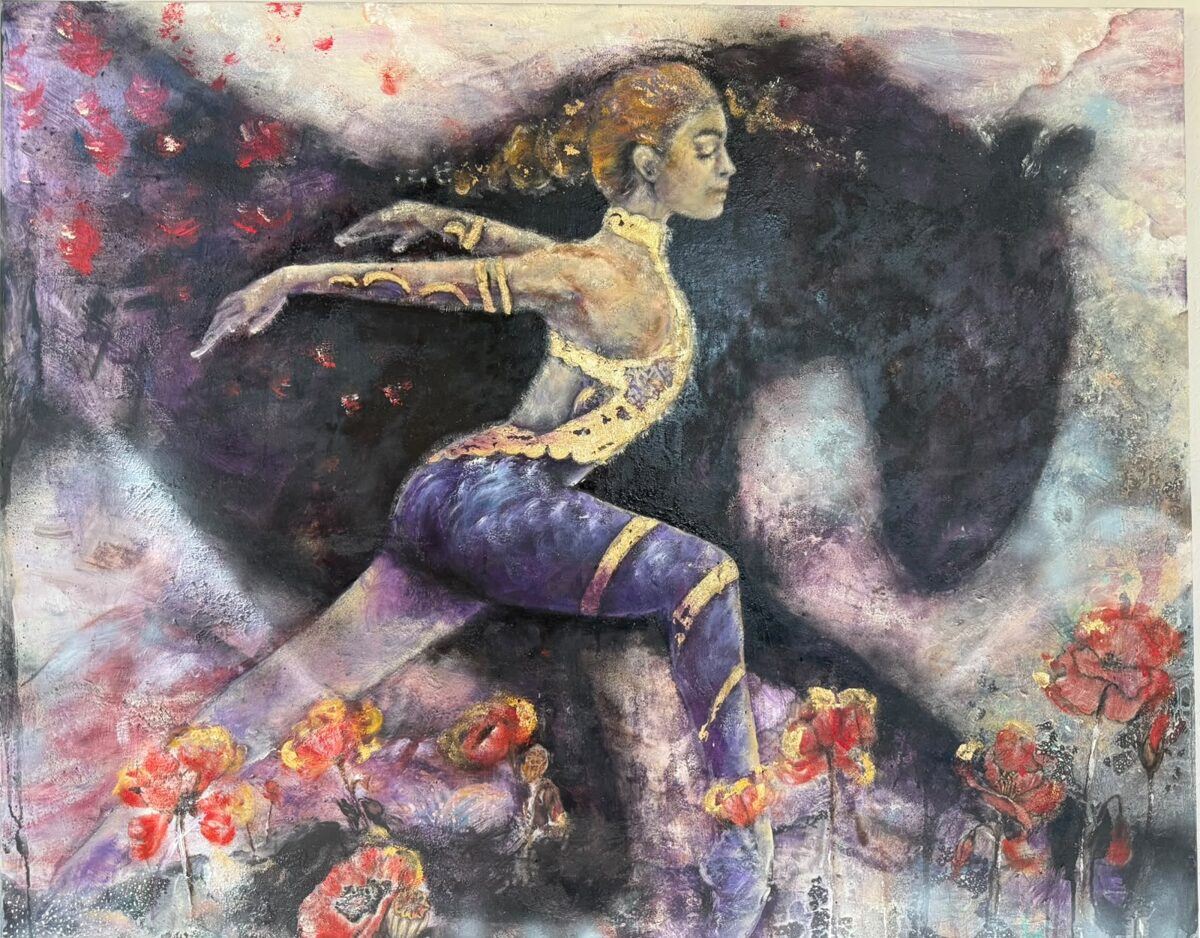
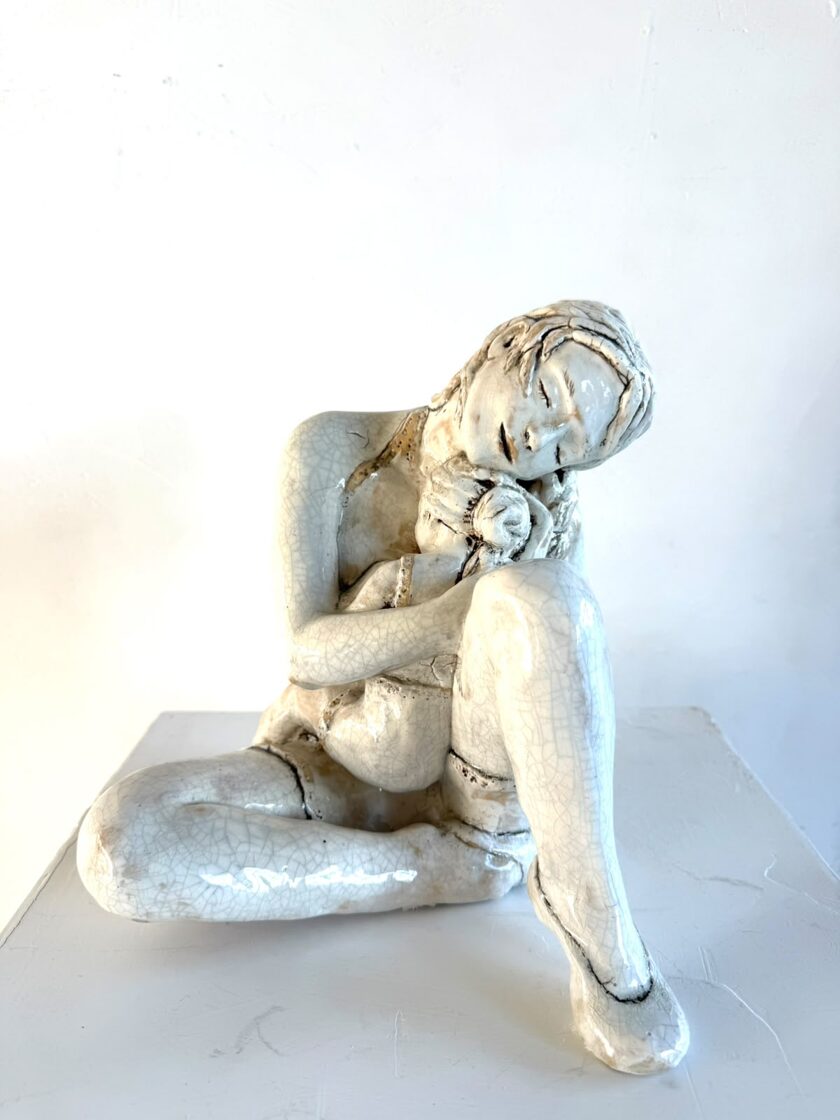
DHIRA BAREIN /Where Love Learns the Shape of Memory/
Dhira Barein begins with a feeling....
Long before horses became one of the defining symbols of her artistic language, they were part of her everyday world. Raised in a commune where every child cared for a horse or a donkey, she grew up surrounded by their quiet presence. While others were eager to ride, she found herself simply watching—captivated by their elegance, their sensitivity, and the silent dignity with which they moved through the world.
That silent dialogue never disappeared.
Throughout her paintings and sculptures, the horse returns again and again—not as a portrait of an animal, but as an emotional presence. It becomes a metaphor for trust without words, freedom without solitude, strength without aggression. In Barein's hands, the horse embodies a rare balance between power and gentleness, reminding us that true strength often reveals itself through sensitivity.
Yet the deeper current flowing through her work lies elsewhere.
Behind the recurring figures of women embracing children is not an idealised vision of motherhood, but the memory of absence.
Barein was only one year old when her parents separated. At the age of six she went to live with her aunt, remaining there throughout much of her childhood. Although surrounded by care, she carried an enduring longing for her mother's presence—a longing that would later become one of the quiet foundations of her artistic voice.
Her sculptures are therefore not autobiographical illustrations, nor are they portraits of specific women or children. They are emotional archetypes. They speak of protection, tenderness, acceptance, and of one of humanity's deepest desires: to belong completely in the presence of another.
Motherhood, within Barein's universe, transcends biology. It becomes a universal language of care—a space where love exists without conditions and where vulnerability is welcomed rather than hidden. Every gesture, every embrace, every softly modelled surface seems to ask the same timeless question: Where do we feel safe enough to be fully ourselves?
This search for belonging unites every aspect of her practice.
Whether through the attentive gaze of a horse or the protective embrace between mother and child, Barein returns to the invisible threads that connect living beings. Her works do not seek dramatic narratives or intellectual distance. Instead, they offer moments of stillness in which viewers may encounter something unexpectedly familiar—a forgotten memory, an emotion without a name, or the comforting recognition that our deepest longings are profoundly shared.
In a world increasingly defined by speed, distraction, and separation, Dhira Barein creates spaces of quiet presence.
Her works ask very little of us.
Only that we pause.
Only that we remember.
Only that we allow ourselves, perhaps for a fleeting moment, to feel at home.
For Barein, art does not exist to explain the world. It exists to reconnect us with what we already know but too often forget: that beneath every search for strength lives a longing for tenderness; beneath every desire for freedom, a longing to belong; and beneath every human story, the simple hope of being seen, understood, and loved. COLLECTION AVAILABLE